

Mobile Telematics vs Legacy GPS: Why Smartphone Mileage Tracking Wins for Small Fleets
- Vikash Verma
- Dec 9, 2025
- 4 min read

If you run a small fleet—3 to 50 vehicles for deliveries, field services, or sales—you probably feel stuck between two bad options: expensive legacy GPS hardware, or no visibility at all. Mobile telematics changes that equation by turning every driver’s smartphone into a powerful mileage tracker, driver coach, and fuel-saving tool, without installing a single black box.
Mobile Telematics vs Legacy GPS: What Small Fleets Really Need
Most small fleets do not need enterprise-grade telematics rigs. They need clear answers to a few basic questions.
Where are my vehicles and which jobs are done.
How many kilometers are being driven for work, and what is deductible or reimbursable.
How drivers are behaving on the road—speeding, harsh braking, idling—and how that impacts fuel and safety.
Mobile telematics vs legacy GPS is no longer a theoretical debate for small fleets; smartphone mileage tracking now delivers the same core visibility with lower costs, faster deployment, and better driver coaching for fuel savings and safety.”

Legacy GPS Tracking: Solid but Heavy for Small Fleets
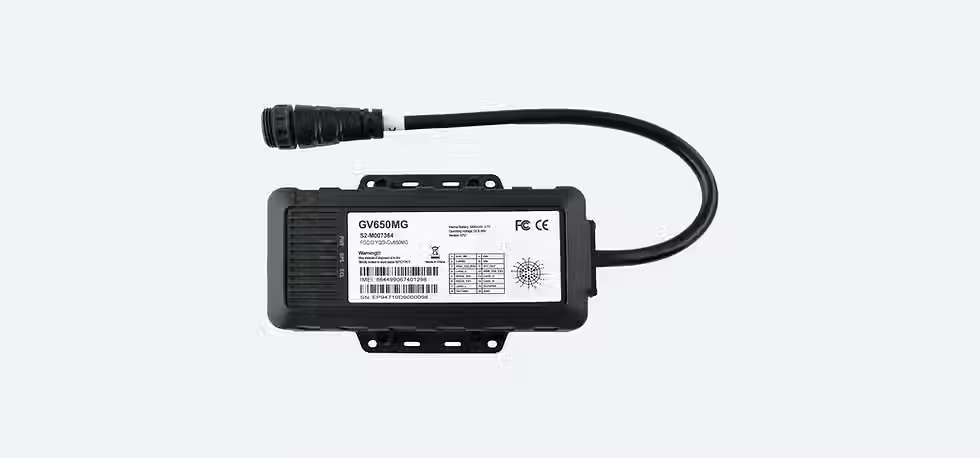
Legacy GPS systems use dedicated hardware installed in each vehicle, continuously sending location (and sometimes engine) data back to a portal.
Where legacy GPS is strong
Consistent vehicle location tracking that does not depend on the driver’s phone.
Useful for theft recovery, high-value assets, and long-haul or regulated operations.
Where it breaks for small fleets
Upfront hardware and installation costs on every vehicle, plus downtime for wiring and maintenance.
Complexity that many small businesses never fully use—lots of dots on a map, not enough actionable insight on fuel, coaching, and tax-ready mileage logs.
For trades, local delivery, or small field teams, these costs often delay or kill the ROI, even if the tech works as advertised.
Mobile Telematics: Smartphone Mileage Tracking and Driver Coaching
Mobile telematics uses the sensors already on a driver’s smartphone—GPS, accelerometer, gyroscope—to detect trips, measure driving behavior, and track mileage. Instead of boxes under the dash, the app becomes the main sensor and user interface.
High-intent problems this solves:
“Mobile telematics for small fleets” looking for a cheaper alternative to hardware GPS.
“Smartphone mileage tracker for fleets” to handle work mileage and reimbursement.
“Driver coaching app to reduce fuel and incidents” using phone data to improve habits.
Because the phone is with the driver, mobile telematics can:
Start and stop trips automatically, logging every work kilometer without manual input.
Score driving style (harsh acceleration, braking, speeding, idling) and translate that into eco-driving tips and fuel-savings estimates.
Tie insights directly back to the driver with in-app feedback, rewards, and leaderboards.
Why Smartphone Mileage Tracking Wins for Small Fleets
For small and mid-sized fleets, smartphone-based mobile telematics usually produces a better cost–benefit profile than legacy GPS.
1. Lower cost and zero hardware friction
No devices to buy, ship, or install; drivers just download an app and sign in.
Pricing is typically per driver or per active user per month, making it easier to scale from 3 to 50 vehicles without CAPEX.
2. Faster rollout and iteration
Fleets can pilot with a handful of drivers in days, not months, and expand based on real fuel and mileage data.
Updates, new features, and scoring improvements ship via the app store, not through hardware swaps.
3. Behavior, not just location
Legacy GPS often stops at “where”; mobile telematics focuses on “how” the vehicle is driven: harsh braking, speeding, and idling trends.
This enables coaching that can reduce fuel use and incidents by double-digit percentages, especially when combined with feedback and incentives.
For ICPs—HVAC and trades fleets, sales and field teams, gig-style delivery operations—these advantages directly impact fuel spend, safety, and admin time, which is where they feel pain every month.

When Legacy GPS Still Makes Sense
Legacy GPS and hardware telematics are not obsolete; they are just better suited to specific cases.
Heavy-duty or long-haul fleets that require hardware for regulatory compliance.
High-value assets where theft and misuse are major risks and vehicles sometimes operate without drivers’ phones.
Deep diagnostics and advanced engine data that phone sensors cannot read.
For many small fleets, the pragmatic path is mixed: use hardware telematics where regulations or asset value demand it, and deploy mobile telematics like Fuelshine across the rest of the light-duty and grey fleets where behavior and mileage matter most.
How Fuelshine Uses Mobile Telematics for Small Fleets
Fuelshine takes the power of mobile telematics and bundles it into a smartphone app designed to control and cut fleet fuel costs while simplifying mileage tracking.
With Fuelshine, fleets can:
Track mileage automatically: Every trip is logged with distance, time, and purpose, creating CRA/IRS-ready mileage records for tax and reimbursement.
Cut fuel waste: AI-powered eco-driving coaching gives instant feedback on inefficient driving, helping fleets save up to 30% on fuel over time.
Reward safer, greener driving: Drivers earn EcoPoints for fuel-efficient trips, redeemable for car rental discounts, fuel vouchers, and partner rewards.

Because everything runs on smartphones, small fleets can start with a few drivers, see real savings and better mileage logs, and then scale across the team without touching a single wiring harness.
Cut your fuel costs by up to 30%, track every deductible kilometre automatically, and turn smart driving into EcoPoints you can redeem for real savings—download Fuelshine and start your free trial today.


Comments